
Last week I got the email every indie builder dreads.
“Your app has been rejected from the App Store.”
It stung. I had spent weeks polishing the interface, structuring the content, and testing on device. Everything was working perfectly. But Apple’s review listed two reasons:
- Copyright and content ownership concerns
- Minimum functionality not met
The first one I expected. The second one surprised me.
⸻
The App in Question
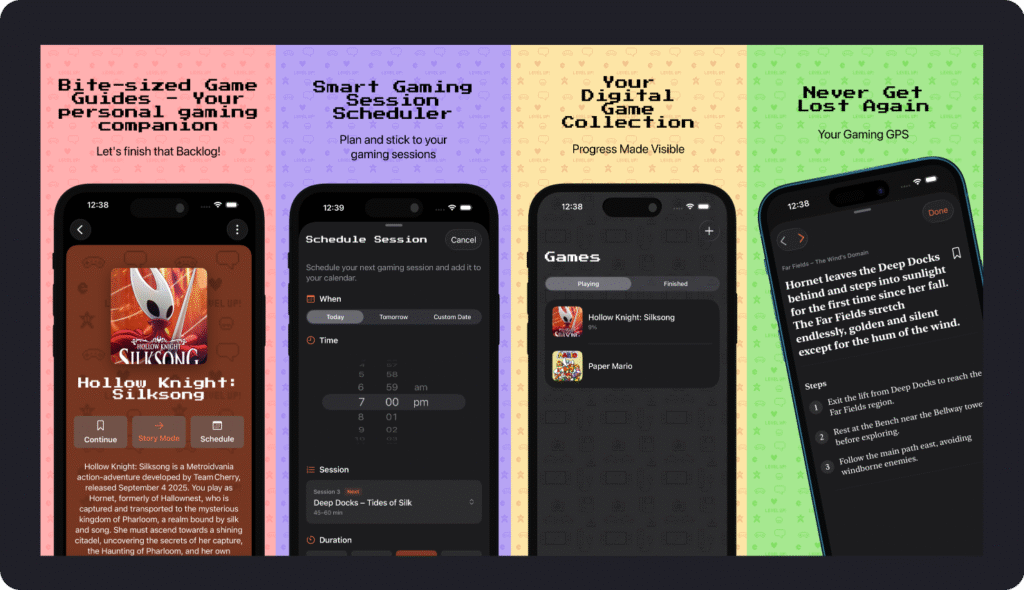
The app was a small personal project designed to help busy gamers pick up where they left off in story driven games. It offered structured guides, short sessions, and a clean interface. It was meant to be simple and focused.
It was not trying to be a social network or a content feed. It was meant to be a companion. But Apple did not see it that way.
They described it as too simple and questioned whether it provided enough value to users. That was hard to accept, because usefulness is not always about how complex something is. Sometimes clarity is the value.
⸻
When Platforms Define Value
Building for iOS means working inside Apple’s ecosystem in every sense. They have a strong view of what an app should be: native, original, and interactive.
That approach makes sense, but it does not always leave space for smaller or more experimental ideas. Many independent projects begin as focused tools that evolve over time. The way Apple defines “minimum functionality” can make that first step harder.
⸻
The Copyright Question
The app included content that was partly AI assisted and community contributed. Everything was rewritten and structured as original summaries. Even so, Apple flagged it for potential copyright concerns.
It reminded me that copyright is not always about what you take. It is also about how it looks. Even if your work is transformative, if it references existing games or media, the perception can still create risk.
⸻
Turning Frustration Into Data
Instead of rushing to appeal or resubmit, I decided to document the experience. It is not a failure. It is feedback.
Every rejection tells you how the system works, what it values, and where creative freedom meets policy. I plan to keep improving the concept, maybe through a web first version or a progressive web app. I will also keep this rejected build as part of the story. It shows the reality of what happens when independent creation meets corporate review.
⸻
What I Learned
- Platform rules are creative constraints. They can be frustrating but they also push you to clarify what matters.
- Copyright is rarely black and white. Even reworked content can be flagged because of association.
- The idea of “minimum functionality” is subjective. What feels valuable to users might not fit Apple’s definition.
- Transparency helps. Being open about what is AI assisted or community made builds trust, even if platforms are still figuring out how to handle it.
⸻
Next Step: Open Experiment
I will treat this project as an open experiment and share its iterations and lessons publicly. Rejection, when shared, becomes knowledge. And knowledge keeps builders moving.
So yes, my app was rejected. But that might be the start of something more interesting: a clear look at what it really means to build inside Apple’s world.
⸻
Final Thought
Rejection hurts less when you see it as research.
This is not the end of the project. It is the first real user test.
And the reviewer was my first unpaid beta tester.